
THE QUICK TAKE
Look at rank for a set; look at both suit and sequence for a run.
Traditional Tongits basics · Check your App’s rule panel
A set: the rank stays the same
A traditional Tongits set contains three or four equal-ranked cards. For example, 6 of clubs, 6 of hearts and 6 of diamonds form a set.
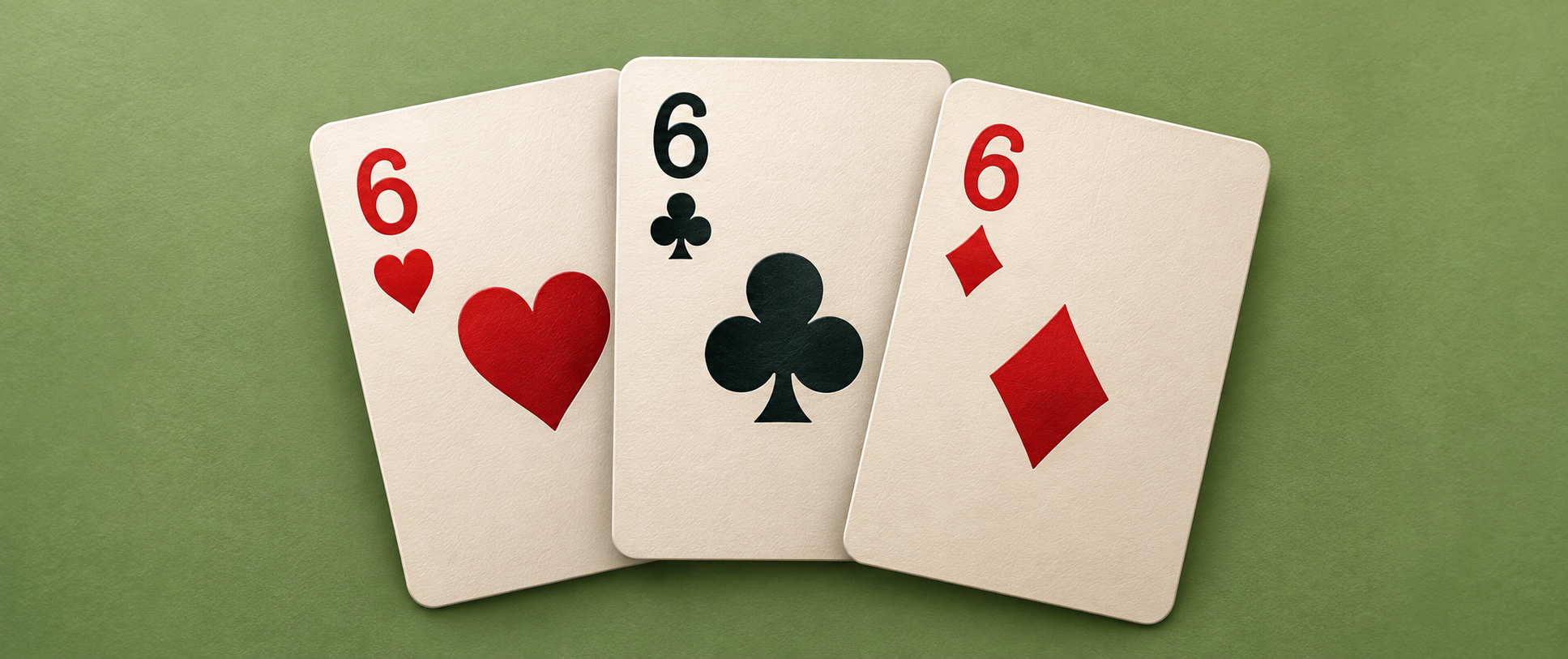
Read the three rank labels out loud. All are sixes. That is the feature to notice in this picture; you are not looking for an order such as six, seven, eight.
A run: one suit, consecutive ranks
A run contains at least three consecutive cards in one suit. In the traditional rules, aces are low. One card cannot count in two groups at once.
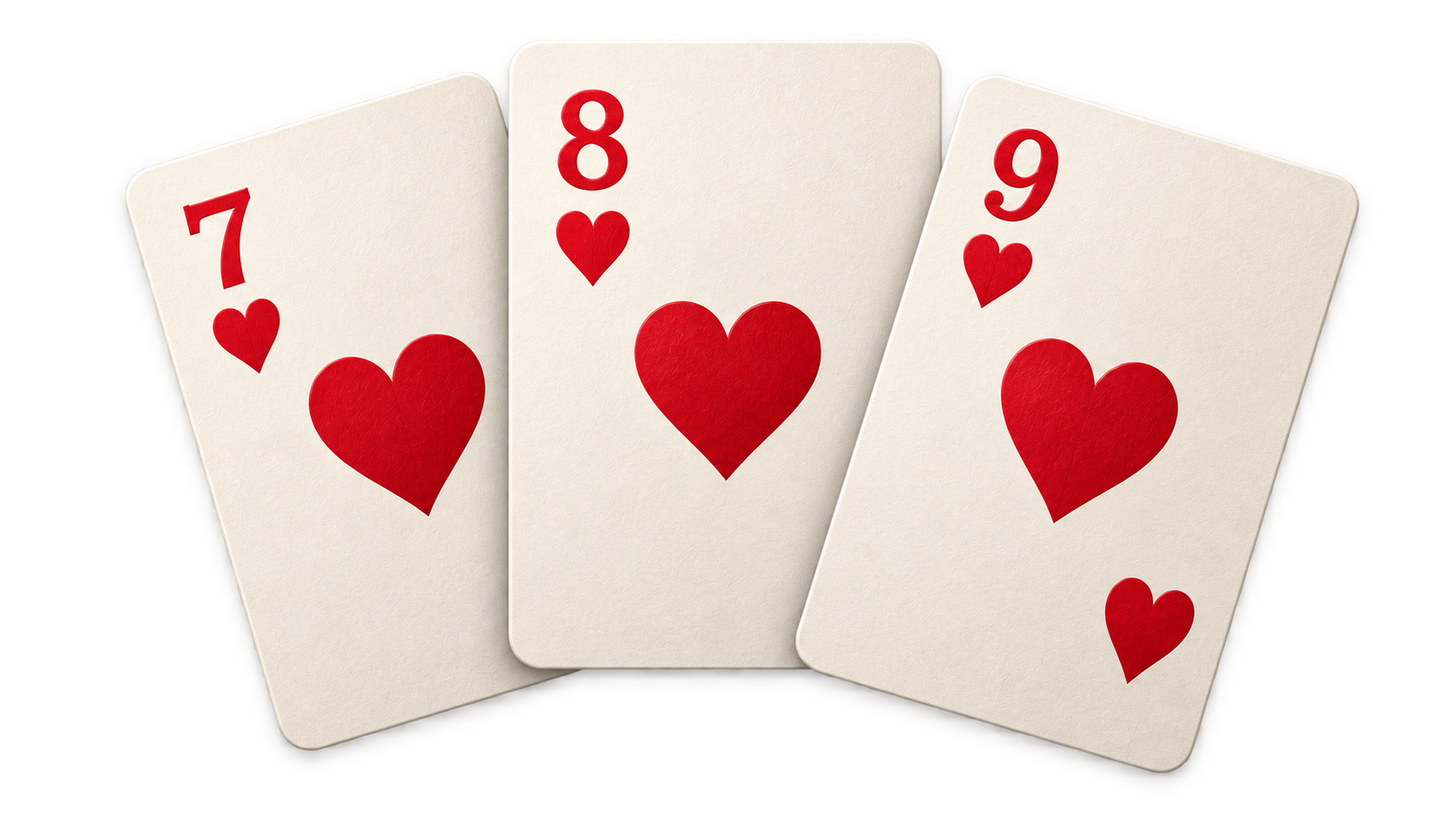
Try two visual checks: do the suit marks match, and is a number missing in the sequence? In this example the hearts match, and the labels go from seven to nine without a gap.
Sapaw: extend a group already on the table
Sapaw means laying off a suitable card onto an exposed group. A fourth six can extend a set of sixes; 10♥ can extend the run pictured above.
Think of it as a separate question from identifying a new group: “Does this card fit the group that is already there?” Timing and eligibility should be checked in your current game mode.
Try a quick card-reading exercise
TRY IT WITHOUT A TABLE
You see 4♠ · 5♠ · 7♠. Is that a complete run?
Reveal the explanation
No. The suit matches, but six is missing. The picture is a useful reminder to check both suit and sequence.
Now place three equal-ranked cards beside three consecutive cards of one suit. Compare what repeats and what changes. This is a recognition exercise, not a prediction of how a hand will end.
Sources & scope
Checked on 10 September 2026. General card-game references are not a guarantee of the rules used in a particular App mode.
- Pagat — Tong Its ↗Independent reference for traditional card-game rules; not an App-specific rulebook.
This is an independently written educational guide, not an official rulebook or a promise of results. Illustrations are original examples, not screenshots from the game.