THE QUICK TAKE
Separate setup, turn order and ending rules. Practise identifying the steps before trying to judge a whole hand.
Traditional Tongits basics for adult beginners · No stakes · App modes may differ
How many players and cards?
Traditional Tongits uses three players and a 52-card deck without jokers. The dealer receives thirteen cards; the others receive twelve each. Remaining cards form the face-down stock. Play goes counterclockwise.
Start by checking the rank and suit labels. Put three paper name cards around an empty table. Mark one “dealer”, then draw an arrow from that seat to the seat on its right. This is a way to rehearse the order without playing for stakes.
What happens during a turn?
The dealer begins by discarding, optionally exposing melds first. Later turns follow: draw one card, optionally expose melds or add suitable cards to existing melds, then discard one. Taking the top discard requires using it in a newly exposed meld; it cannot be taken merely for sapaw.
Read the diagram as an order of actions, not three compulsory plays. On a sheet of paper, make a box for each step. Record what happened in the relevant box; leave the optional-action box blank when nothing was laid down.
What do meld, sapaw and unmatched mean?
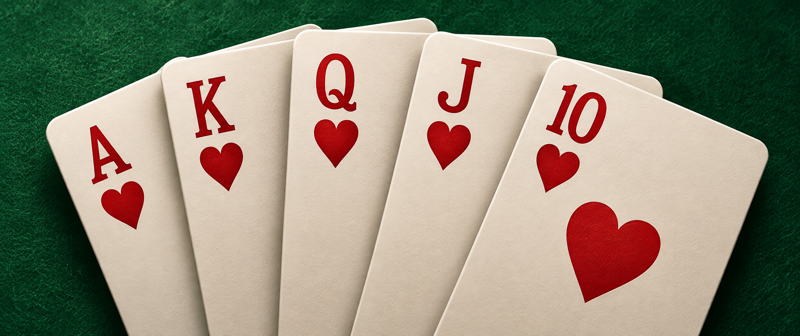
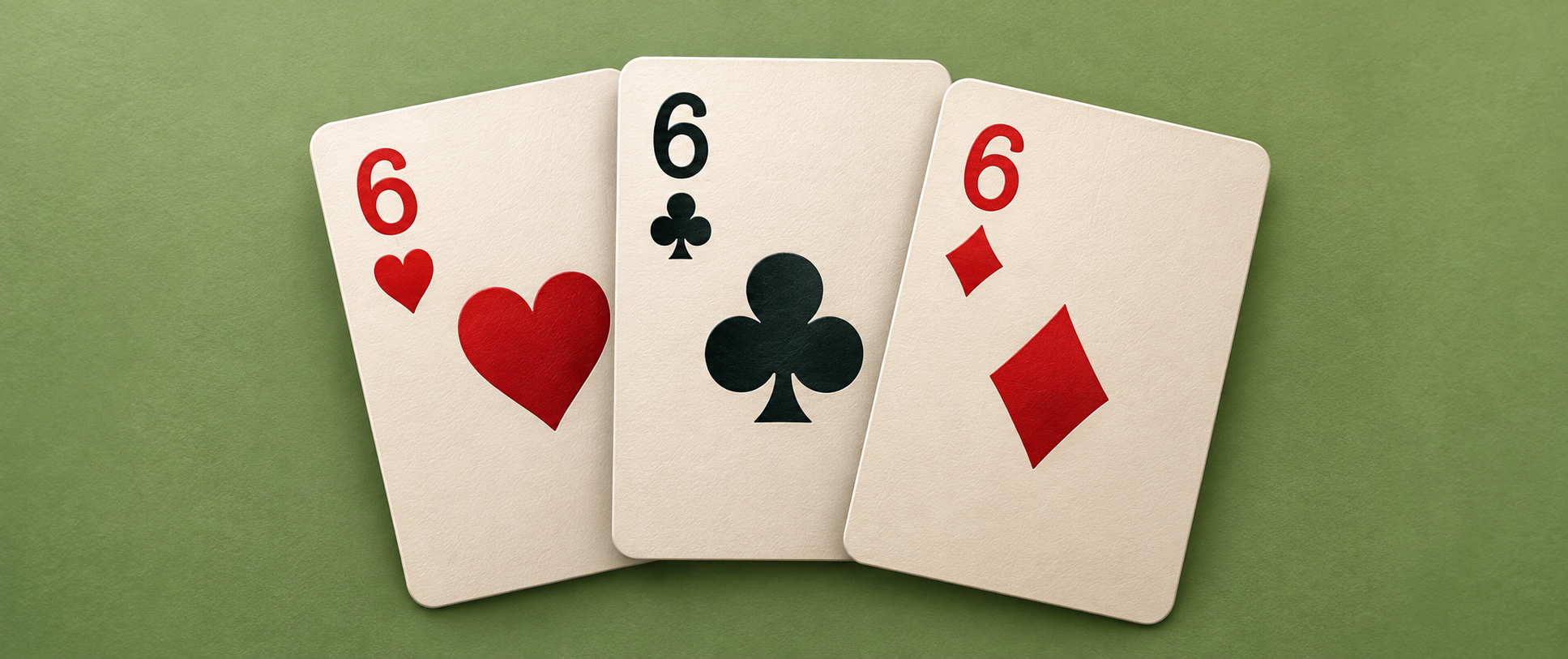
Melds are equal-rank sets or same-suit runs. Aces are low. Sapaw adds a fitting card to an existing exposed meld. Unmatched cards are those outside combinations. For counting, aces are one, face cards ten and number cards their printed number.
Use our sets, runs and sapaw illustrations beside this explanation. Try pointing at the feature that makes a group valid: repeating ranks or consecutive ranks with matching suit symbols. Do not use the same physical card in two demonstration groups.
How can a hand end?
A hand can finish through Tongit, a Draw call or exhausted stock. These have different eligibility and tie rules: see Pagat’s ending rules. Do not confuse drawing a card with calling Draw.
For a first paper exercise, stop after demonstrating the action sequence. Do not invent a winner from an unfinished example. Before a complete no-stakes game, agree on one written rules reference, including the ending conditions. Leave payment rules out of your practice.
Check the sequence, not a winning strategy
PAPER-DECK CHECK
Your notes describe a normal turn as “discard, then draw”. Does that match the sequence above?
Reveal the explanation
No. For a normal turn, put drawing first and discarding last. Keep the dealer’s opening turn on a separate note so you do not mix the exception into every turn.
Reading an App instead? Use the Tongits Go mode and controls checklist. For another game name, first check Pusoy versus Pusoy Dos; their rules are not interchangeable.
Sources & scope
Checked on September 13, 2026. A basic learning guide based on Pagat, with our own paper-deck exercise. Advanced eligibility and tie rules are linked to the reference; this is not a complete tournament or App rulebook.
- Pagat — Tong Its ↗Independent reference for traditional card-game rules; not an App-specific rulebook.
This is an independently written educational guide, not an official rulebook or a promise of results. Illustrations are original examples, not screenshots from the game.